About Therapy
What to expect…
We begin with a conversation about who you are and what you want from therapy.
In early sessions I ask about any previous experiences with therapy and your decision to start. We discuss structure and expectations and I ask more questions than I will moving forward.
We have a conversation about your mental and physical health, lifestyle, family, relationships, and of course, the issue you bring.
At this stage I want to clarify what motivated your choice to start.
If therapy was successful, what would be different in your life?
Once we are clear on the aims of therapy and there is sufficient context into who you are, we transition into working with whatever you bring into session, grounded in your present moment experience and motivation for starting therapy.

Would we be a good fit?
There are a number of peer reviewed studies that suggest the efficacy of therapy is correlated with the quality of the relationship in between the therapist and client.
We may be a great fit if you identify as some of the following: curious, creative, hard on yourself, struggle with addiction, enjoy humor, hard working, learning new things, come from an immigrant family, have a desire to explore how your past effects your present, or are looking for honest feedback and support in making new choices and changes.
We may not be a good fit if you’re looking for a therapist with a formal, diagnosis-driven approach. I do not specialize in any specific area or technique such as polyamory or EMDR.
Therapeutic Approach
Gestalt Therapy
Gestalt therapy evolved out of Freudian psychoanalysis. Instead of focusing on interpreting the past it placed emphasis on awareness and the here and now experience of the therapy session. It is also influenced by Gestalt psychology, phenomenology, existentialism and Eastern philosophies.
The paradoxical theory of change is a core concept of Gestalt therapy. It suggests change happens not when we try to be something we are not, but when we become what we are. The more we fight, fix, or wish things to be different, the more divided we end up. When we accept our present moment experience, we can approach change from solid ground. By stopping the effort to change we paradoxically create the conditions for change.
Gestalt therapy is a process oriented approach that uses here and now awareness in the session to focus on the how you are talking — not just what you are talking about. By becoming aware of how you show up in session, you can gain a clearer understanding of how you show up in the rest of your life.
The concept of “unfinished business” also called an “incomplete Gestalt” (“gestalt” roughly means “whole” or “configuration” in German), is central to Gestalt therapy. Unresolved experiences, emotions, or relationships from the past shape how we feel, react, and relate in the present. Gestalt therapy places attention on these unfinished situations so they can be acknowledged, integrated, and transformed.
Creative indifference is a core Gestalt principle. I am not attached to any particular outcome for you and approach what emerges with curiosity and attention. From this place of not forcing any agenda, you have space to notice your process, needs and make what choices fit for you.
Gestalt therapy is an existential approach that places emphasis how humans create their own life’s meaning. Existential anxiety is embraced as a basic condition of life, not an obstacle to overcome. Together we check on how you construct meaning and what might feel risky about making choices or expressing what you want.
A Gestalt therapist uses their worldview and experience in the session to connect as another human, not the expert with the answer. I have found it to be a deeply human and non prescriptive approach to therapy.
My approach is rooted in Gestalt therapy and is the ground out of which other modalities become relevant.
“The existential concept of freedom implies the possibility of making choices… the gestalt therapist does not choose on the client’s behalf what the client should do with his or her life.”
—Hanne Hostrup
Parts Therapy
Internal Family Systems (IFS)
“Every part has a positive intention.”
—Dick Schwartz
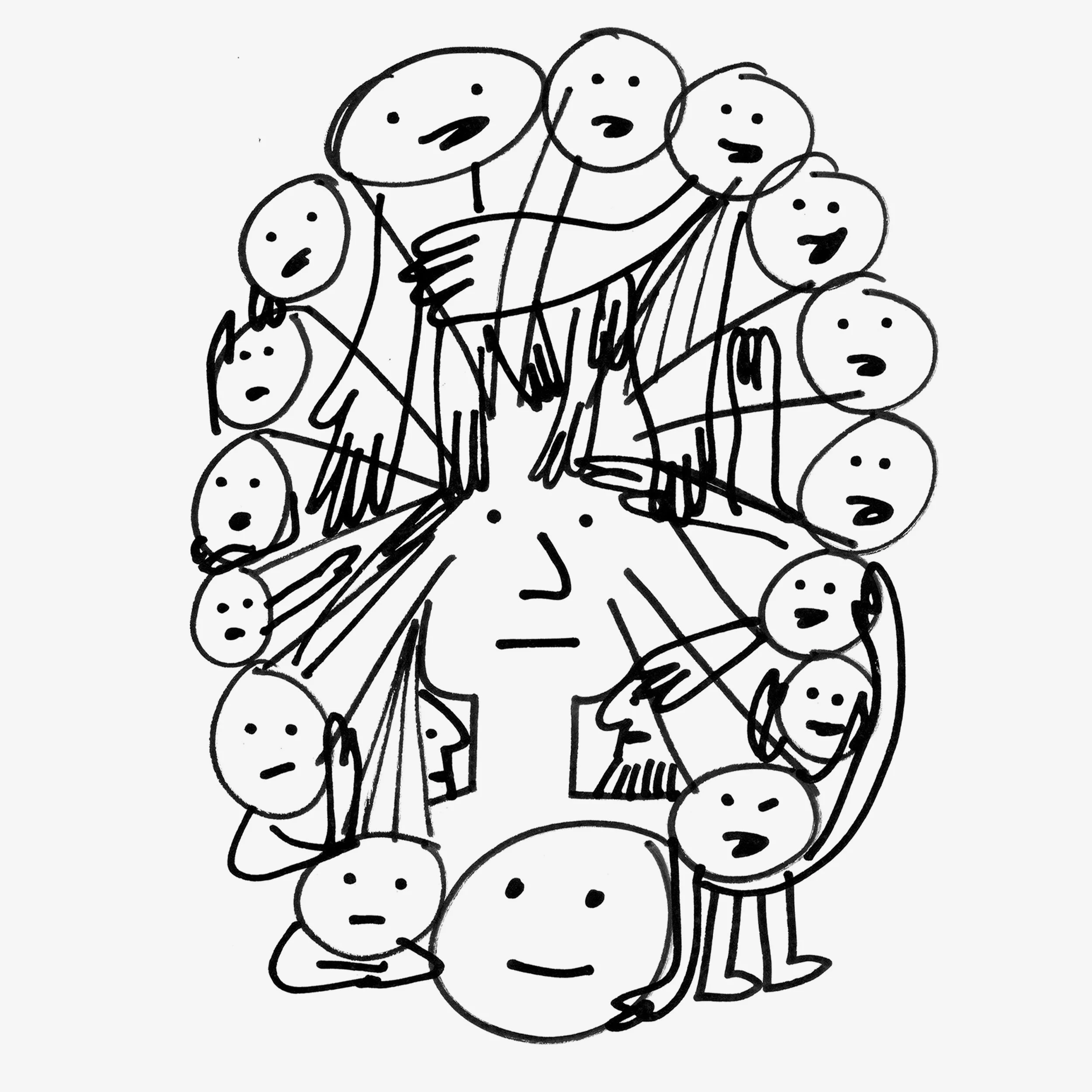
Internal Family Systems (IFS) was developed in the 1980s by Dick Schwartz. The model proposes that the mind is made up of parts, split into three categories. Exiles, which carry wounds and vulnerability, Managers, which work to prevent pain by staying in control, and Firefighters, which react quickly to soothe or distract when the pain is too much. At the center of the system is the Self, a steady, curious and compassionate presence that can help these parts heal and reorganize.
When we feel divided, the most dominant part takes control. Parts developed in the past to protect us from what we were taught was not okay to feel or express. Often they emerge from a fear of not being good enough, or to avoid feeling shame or abandonment.
Some parts are hyper critical. Some learned to stay quiet and small. Others get loud and angry. They may seek validation by being charming, working hard or achieving. Other strategies include: trying to be perfect, staying busy, escaping feelings with mindless activities or numbing out with substances. In some context, the strategy of the part worked quite well and it developed into a habitual way of being. When that context or you change, the part can be temporarily helpful at best or life threatening at worst.
Parts work creates space to notice the strategies and reactions you developed over time without mistaking them for the whole of who you are.
By sharing honestly, you start to notice more clearly what distinct inner voices believe and when they are activated. When there is some distance from the idea that “this is just me” (where parts work can start from) it is possible to un-blend with the part and see it for what it is: a self perpetuated protective concept. From here, the work looks like offering attention and gratitude to the part for taking care of you. You are the adult that can offer this part the care and understanding that was absent when it was formed. When we take responsibility, we step into a place that allows us to feel more choice and face life with humility, honesty and courage.
I work with clients to find language for their parts that resonates for them. Parts are revealed by sharing your fears, core beliefs and exploring how you express or hold yourself back in relationships. This work requires somatic awareness, vulnerability and patience. These reactions and patterns developed for a reason and the goal is not to get rid of them. Trying to often makes them louder. However, our relationship with parts can change drastically. What was once a dominating all encompassing inner voice can become an inner check engine light to slow down, pay attention to what story you are telling yourself and navigate with more agency.
Cognitive Behavioral Therapy
"The best years of your life are the ones in which you decide your problems are your own."
—Albert Ellis
Does your mind ever fixate on the worst case scenario? Do you notice you can think about things in an all or nothing way? Can you overgeneralize, take things personally or filter out the good and focus on the bad? Maybe you are convinced at times that you can tell what others are thinking… all of the above?
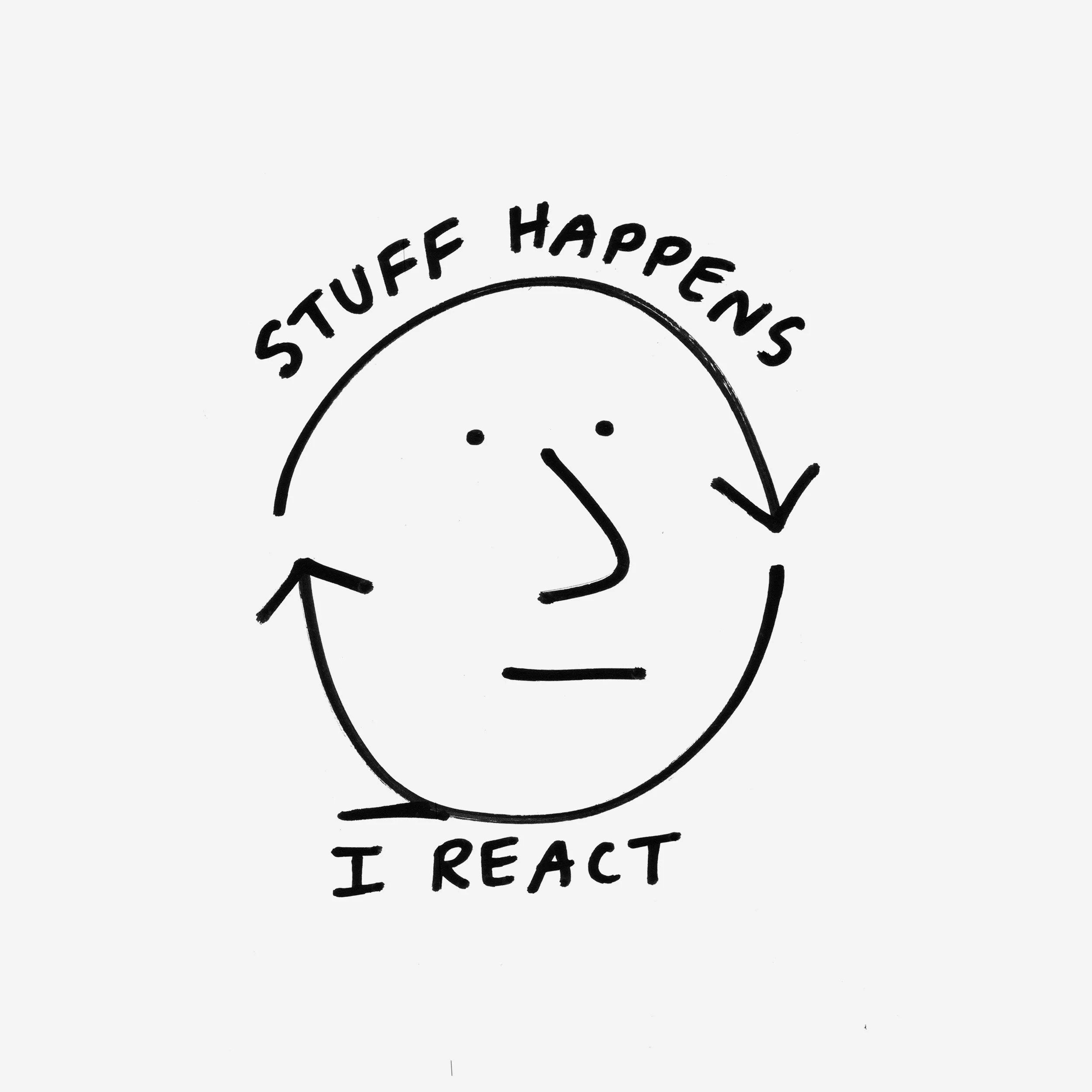
Cognitive Behavioral Therapy (CBT) labels these common patterns as “cognitive distortions” and works by actively labeling them and exploring the mechanics of how our thoughts, emotions and behaviors are repetitive, often unconscious and reinforce each other.
CBT began in the 1950s–60s with Albert Ellis and Aaron T. Beck’s Cognitive Therapy, focusing on how thoughts shape emotions and behavior. Today, it is a widely used, evidence-based approach for depression, anxiety, and many other mental health concerns.
Stoicism, a philosophy with its roots in ancient Greece, is one of the many influences of CBT. Both believe people are disturbed not by events themselves, but by the beliefs they hold about those events. A very Stoic-inspired CBT practice is learning to pause and ask: what part of this situation is actually within my control, and what is not? This is one example of the practice of cognitive reframing. Reframing can help us step out of reactivity and shift into more realistic perspectives.
CBT can be done in a dry and clinical way. This looks like questionaries, acronyms, catchphrases, giving homework and therapists with clipboards and handouts. I do not take this approach and still find it to be supportive. Catching and labeling repeated distortions helps build awareness and creates space between stimulus and reaction.
CBT focuses on symptoms, not underlying causes and I find value in pairing CBT concepts with more humanistic and experiential approaches.